Friday, November 22, 2013

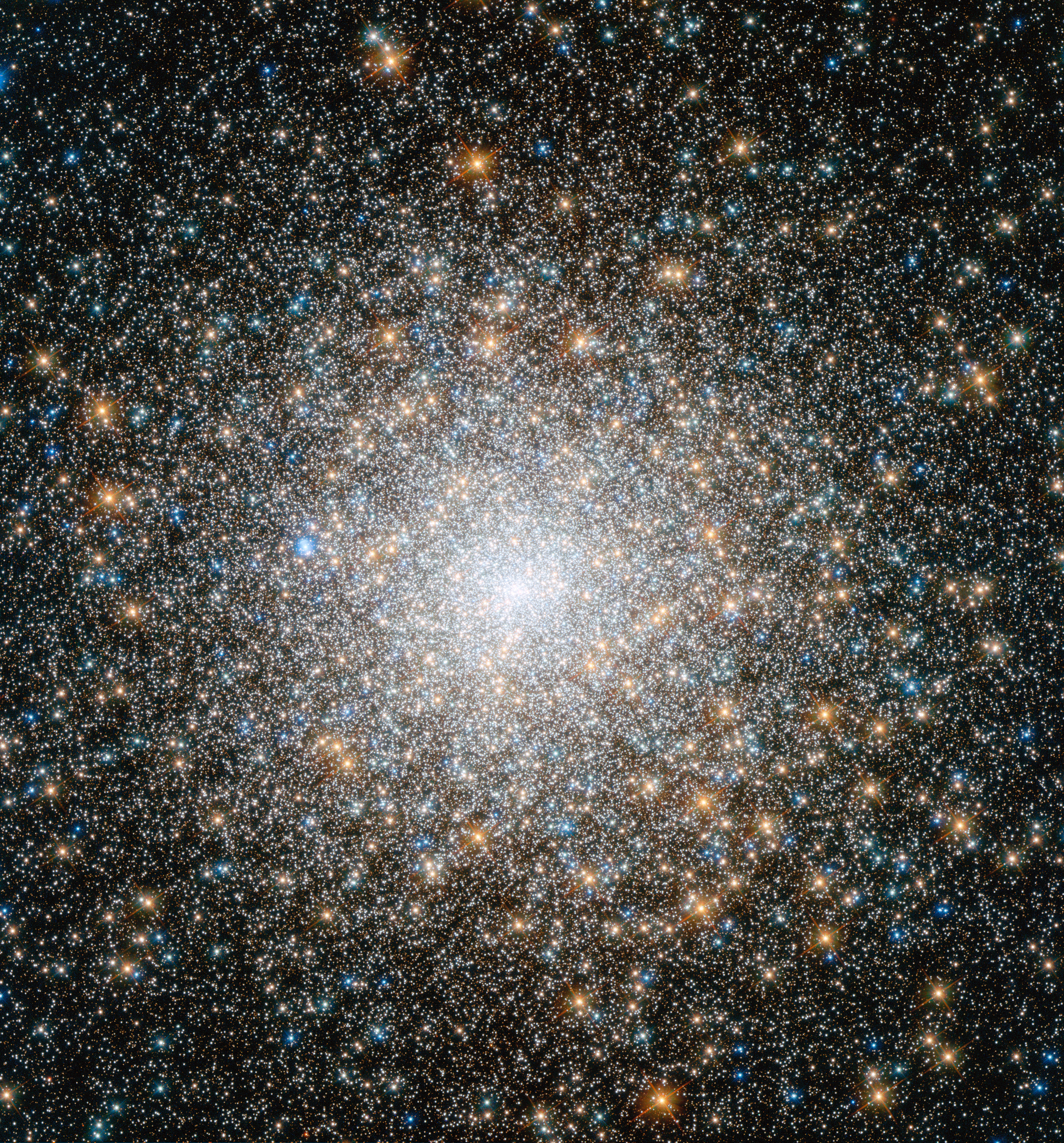
Globular Cluster M15 from Hubble

The website this APOD was found on is: http://apod.nasa.gov/apod/ap131119.html

The globular cluster pictured, M15, is in the constellation Pegasus, the Winged Horse. M15 is composed of over 100,000 stars and is one of an estimated 170 globular clusters remaining. M15 orbits the center of the Milky Way and is easily visible with binoculars. This globular cluster is one of the densest concentration of stars known and contains many pulsars and variable stars. This image of M15, about 35,000 light years away, was taken by the Hubble Space Telescope. I think that it's amazing that the Hubble Space Telescope can capture an image so far away from Earth. It's awesome knowing what M15 looks like since we have been learning the constellations and their features.
See Explanation.  Clicking on the picture will download
 the highest resolution version available.

Aurora and Unusual Clouds Over Iceland

I got the APOD from this link: http://apod.nasa.gov/apod/ap131118.html

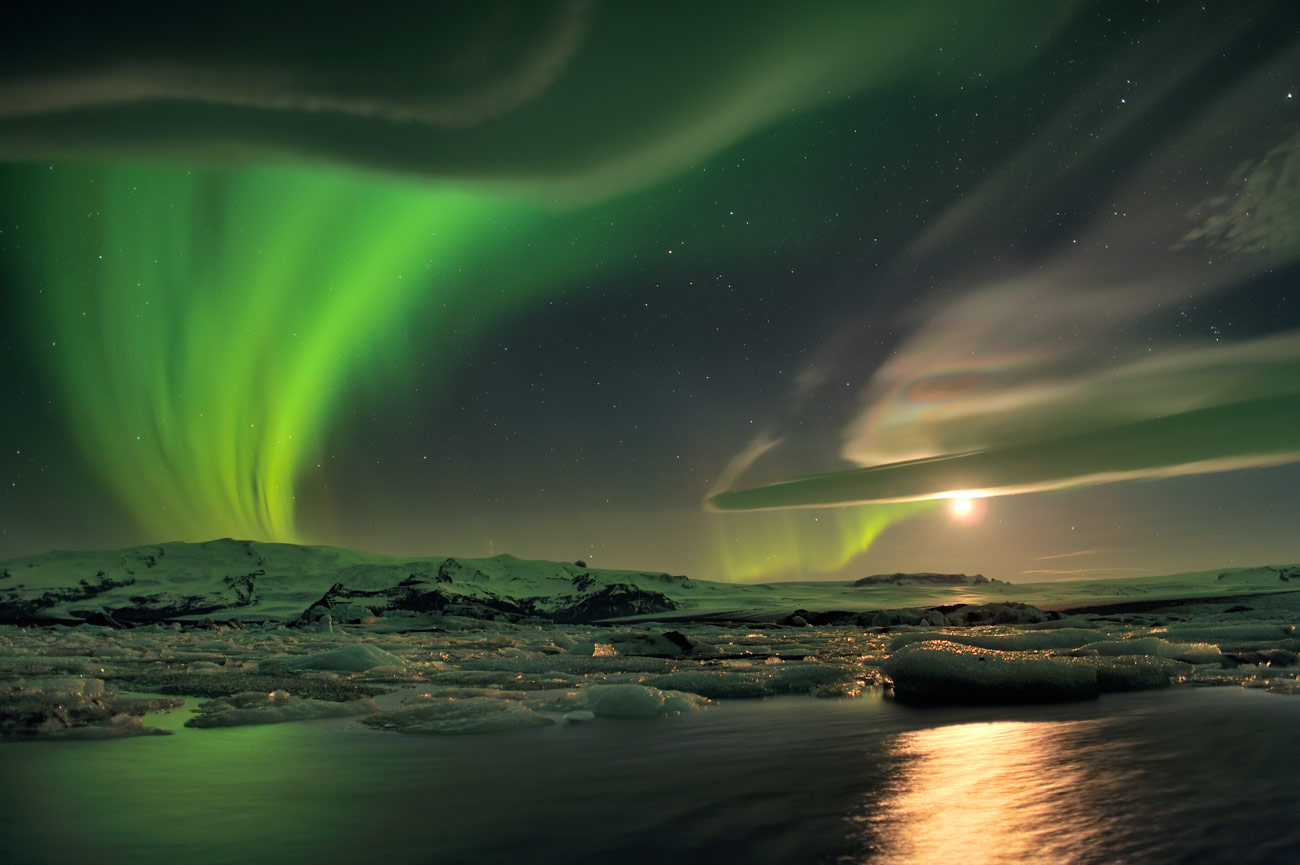
This APOD is a photograph of the largest glacier in Iceland, Vatnajokull, with bright green auroras behind it. The light from the auroras is reflected onto the lake. On the right there is a lenticular cloud and above it iridescent lenticular clouds in a range of colors. The Moon and the stars in the background complete this beautiful image. I think that this combination of space phenomenon and Earth's nature is breathtakingly beautiful.


See Explanation.  Clicking on the picture will download
 the highest resolution version available.

Tuesday, November 5, 2013

NGC 7841: Smoke Nebula

This APOD is from the website: http://apod.nasa.gov/apod/ap131101.html

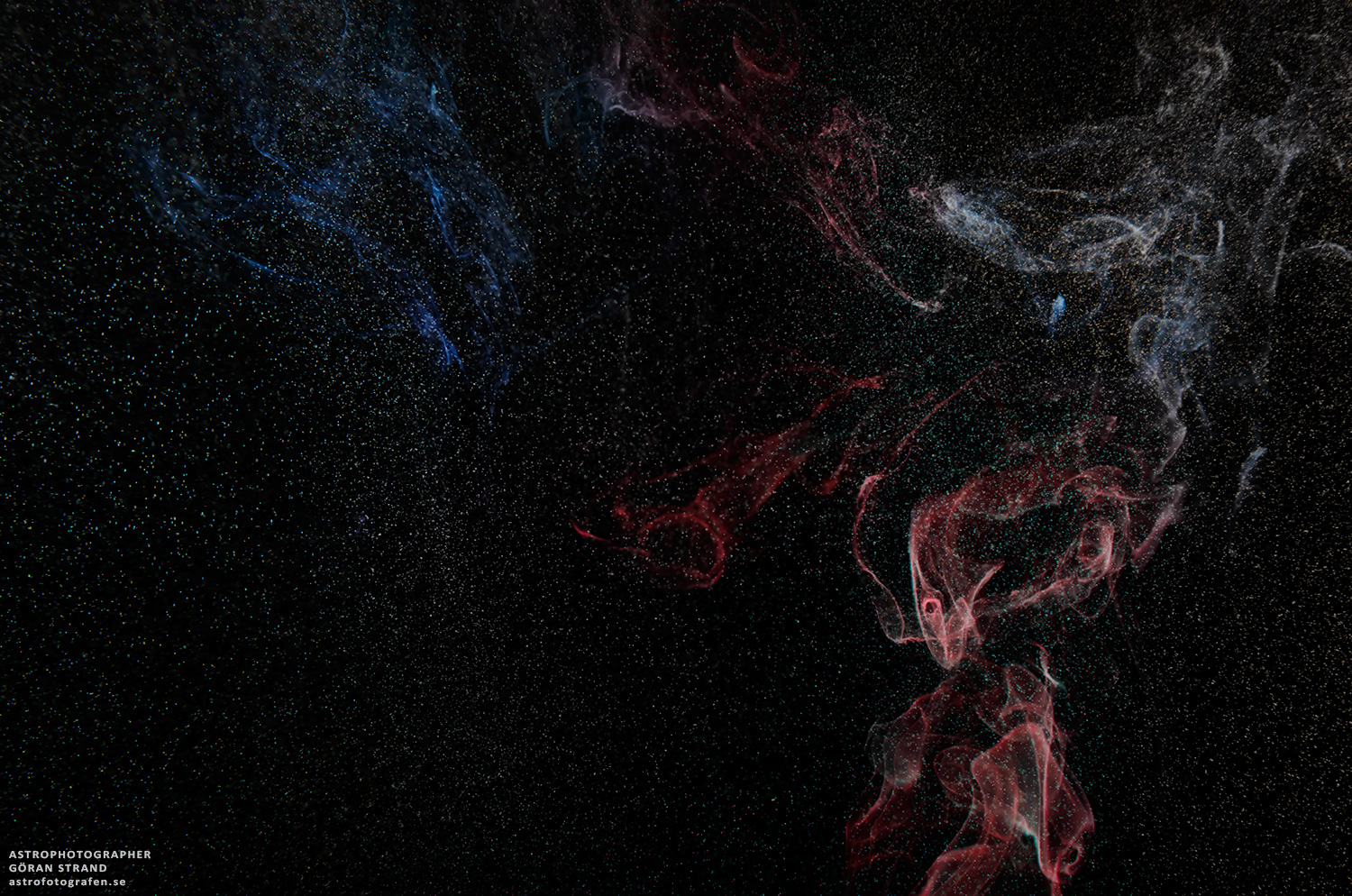
This image is of NGC 7841, also known as the "Smoke Nebula". This nebula is found in the modern constellation of Frustriaus (the frustrated astrophotographer). The nebula is a few light-nanoseconds from Earth. This is not an expanding supernova remnant along the plane of the Milky Way. The image was created by using flash photography on rising smoke. It is composed of water droplets splayed by a planet mister by an astrophotographer who became frustrated. I think that this image is very interesting. I liked learning about the effects that caused this image to appear the way that it is and the actual truth to it's discovery.

See Explanation.  Clicking on the picture will download
 the highest resolution version available.


Eclipse Over New York


This is a selection from this link: http://apod.nasa.gov/apod/ap131104.html

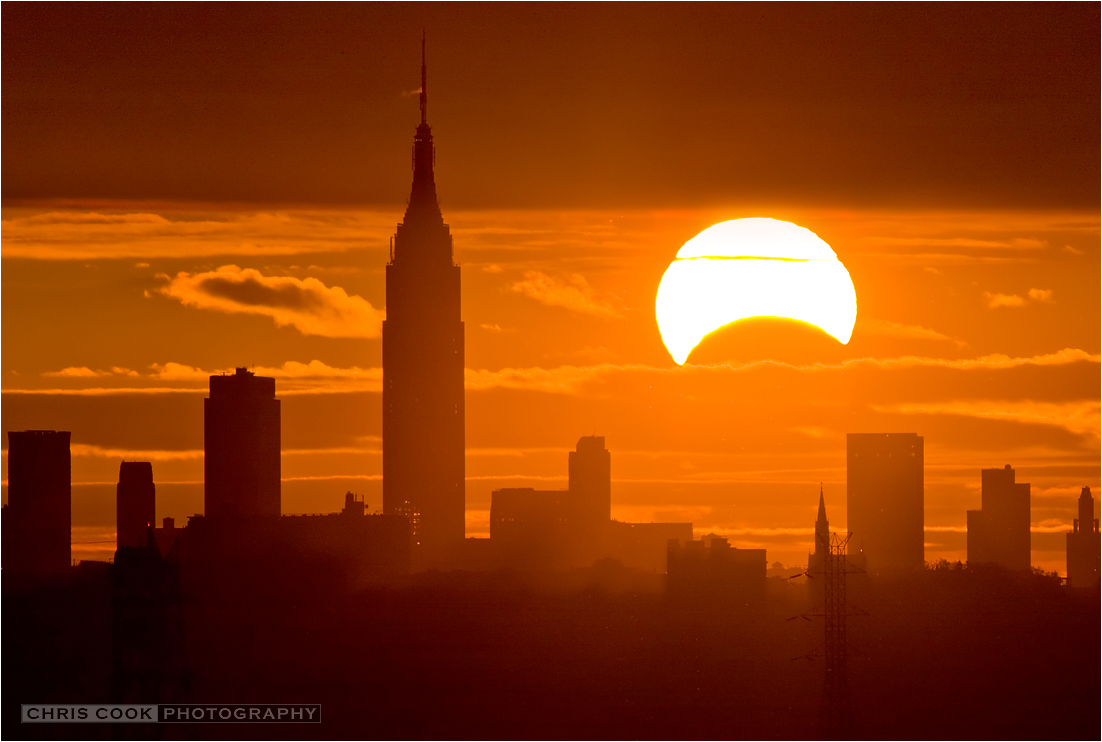
This photograph titled "Eclipse Over New York". The Sun was partially eclipsed by the moon. This is seen from most of the eastern North America and northern parts of South America. Much of Africa was able to see the eclipse during it's daytime.This eclipse was a hybrid where parts of the Earth saw the Moon as not large enough to cover the whole Sun, while other parts of the Earth witnessed a total solar eclipse where the Sun was completely covered by the Moon. Small changes in the angular size of the Moon were caused by the non-flatness of the Earth combined with the Moon's elliptical orbit. Unfortunately I missed viewing this partial solar eclipse but I am mystified by these photos. I find the scientific explanations in this APOD fascinating.


See Explanation.  Clicking on the picture will download
 the highest resolution version available.

Wednesday, October 30, 2013

Observation

Date: 29 October, 2013
Time: 7:00 - 9:00 PM X2=(4 hrs)
Place: Casey Key near Fish house
Sky Conditions: Partly cloudy
Instruments Used: Naked eye, binnoculars, Mr. Percival's Telescope
Planets: Venus
Bright Stars: Vega, Altair, Deneb, Polaris
ations Noted: Delphinus, Vulpecula, Sagitta, Grus, Sagittarius, Aquila, Aquarius, Capricorn, Lyra, Deneb, Scorpius,Pegasus, Hercules
Binary Stars:Alberio
Deep Sky Objects: M11, M27, M13
Other: the Moon, at least 5 satellites, at least 5 shooting stars, one blinking weather balloon? to the left of Delphinus, Milky Way

Alberio is a binary star. We observed it's two colors; a yellowish star and a bluish one. Observed Alberio and some of the deep sky objects in Mr. Percival's telescope. The galaxies appeared like fuzzy spots.


Friday, October 18, 2013

M2-9: Wings of a Butterfly Nebula

I selected the photograph from this link:
 
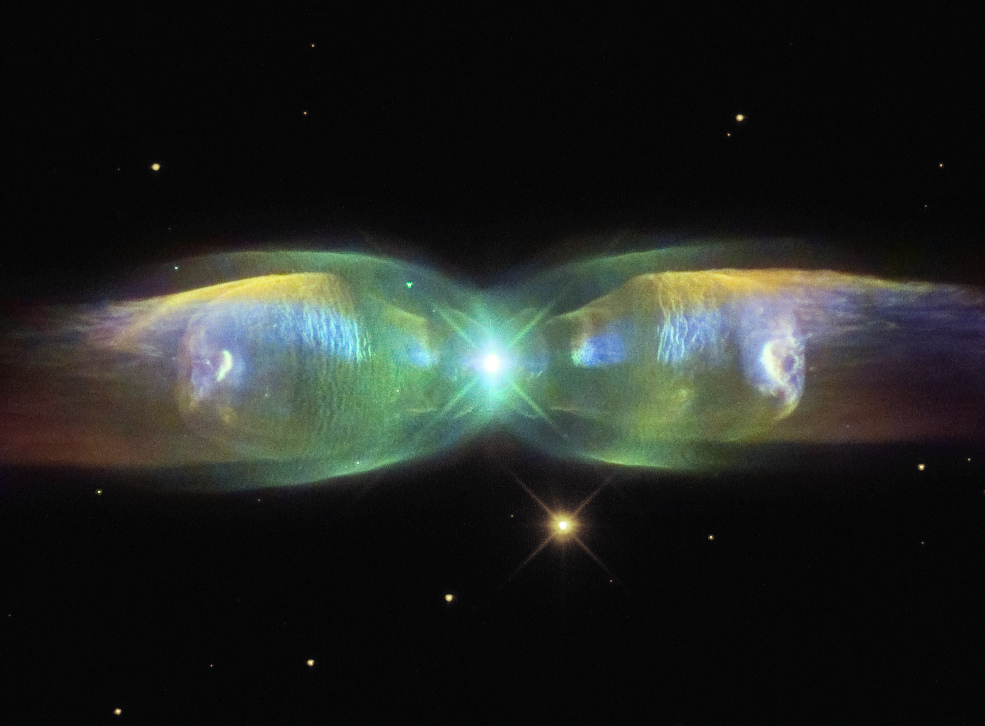
This star is transforming itself into a white dwarf by releasing gaseous envelopes. The expanded gas often forms a planetary nebula that fades over thousands of years. M2-9 is a butterfly planetary nebula 2100 light years away. In the center two stars orbit inside a gaseous disk. I find M2-9 really beautiful. The represented colors are really nice. I think that the shape of this planetary nebula is really awesome and it's interesting learning about why it forms and how.

See Explanation.  Clicking on the picture will download
 the highest resolution version available.

Thursday, October 17, 2013

Observation

Date: 17 October, 2013
Time: 9:00 - 10:00 PM
Place: Home (Sarasota)
Sky Conditions: Clear
Instruments Used: Naked eye
Planets: Venus
Bright Stars: Vega, Altair, Polaris, Thuban
Constellations Noted: Andromeda, Aquarius, Aquila, Cassiopeia, Cygnus, Cetus, Cepheus, Draco, Lyra, Pegasus, Hercules, Sagittarius, Scorpius, Serpens, Orion, Ursa Major, Ursa Minor
Binary Stars:
Deep Sky Objects:
Other: The Moon

The moon is close to full and Venus is so pretty. It was really nice out tonight. The sky was clear and I was able to star-hop easily (and study for the constellation quiz).

Wednesday, October 16, 2013

Observation

Date: 16 October, 2013
Time: 8:00 - 10:00 PM
Place: Home (Sarasota)
Sky Conditions: Mostly clear
Instruments Used: Naked eye
Planets: Venus
Bright Stars: Vega, Altair, Polaris, Thuban
Constellations Noted: Andromeda, Aquarius, Aquila, Cassiopeia, Cygnus, Cetus, Cepheus, Draco, Lyra, Pegasus, Hercules, Sagittarius, Scorpius, Serpens, Orion, Ursa Major, Ursa Minor
Binary Stars:
Deep Sky Objects:
Other: The Moon

I can now find certain stars easier and faster due to practice. I would like to learn more binary stars and maybe observe deep sky objects on one of the astronomy nights.

Willebrord Snell

Willebrord Snell was on born June 13th, 1580 in Leiden, Netherlands. He was a Dutch astronomer and mathematician. Snell's father, Rudolph Snell, was a professor of mathematics. Rudolph Snell wanted his son to study law, but Snell wished to follow in his father's footsteps and study mathematics. His father boarded students in his own house where he ran a private school. Snell grew up with the other students and was taught by his father. Later he traveled frequently, discussing astronomy. While in Prague he was introduced to Tycho Brahe and his assistant Johannes Kepler and assisted them in making observations. After Brahe died, Snell moved on to other locations and continued to visit mathematicians. Snell returned to Leiden and published many works including Eratosthenes Batavs, Cyclometricus, de Circuli dimensione, Tiphys Batavs, and Descriptio Cometae. In Cyclometricus he improved the method of calculating the approximate value of 'pi' by polygons. He also edited other works containing astronomical observation. Snell succeeded his father as professor of mathematics at University of Leiden when his father became too ill to continue teaching.  In 1615 he planned and carried a new method of finding the radius of the earth by determining the distance of one point on its surface from the parallel latitude of another, by means of triangulation. Snell rediscovered the law of refraction that was primarily discovered by Ibn Sahl. The law of refraction demonstrates that when a ray of light passes from a thinner element into a denser element the angle of the ray bends to the vertical. For many years Snell was thought to have been the founder of this law and was given credit. This is why the law of refraction often called "Snell's law". Snell received his degree for Master of Arts from the University of Leiden and married. It is rumored that he had eighteen children, of which, only three survived to adulthood. At age forty-six Snell died from colic. Symptoms of colic involve fever and paralysis of the arms and legs. He was ill for two weeks before passing on October 30th, 1626.


Works Cited
"Willebrord Snell." Biography. N.p., n.d. Web. 16 Oct. 2013. <http://www.thefamouspeople.com/profiles/willebrord-snell-528.php>.
"Willebrord Snellius." Wikipedia. Wikimedia Foundation, 24 Sept. 2013. Web. 16 Oct. 2013. <http://en.wikipedia.org/wiki/Willebrord_Snellius>.
"Willebrord Van Royen Snell." Snell Biography. N.p., n.d. Web. 16 Oct. 2013. <http://www-history.mcs.st-andrews.ac.uk/Biographies/Snell.html>.

Tuesday, October 15, 2013

Observation

Date: 15 October, 2013
Time: 8:00 - 10:00 PM
Place: Home (Sarasota)
Sky Conditions: Mostly clear
Instruments Used: Naked eye
Planets: Venus?
Bright Stars: Vega, Altair, Polaris, Thuban
Constellations Noted: Andromeda, Aquarius, Aquila, Cassiopeia, Cygnus, Cepheus, Draco, Lyra, Pegasus, Equuleus?, Hercules, Sagittarius, Scorpius, Serpens, Orion, Ursa Major, Ursa Minor
Binary Stars: Alberio
Deep Sky Objects:
Other: Milky Way?

Monday, October 14, 2013

Observation

Date: 14 October, 2013
Time: 8:00 - 10:00 PM
Place: Home (Sarasota)
Sky Conditions: Clear
Instruments Used: Naked eye
Planets: Venus
Bright Stars: Vega, Altair, Polaris, Thuban
Constellations Noted: Aquarius, Aquila, Cygnus, Cepheus,Corona Borealis, Corona Austalis, Draco, Lyra, Hercules, Sagittarius, Scorpius, Serpens, Orion, Ophiuchus, Ursa Major, Ursa Minor
Binary Stars: Alberio
Deep Sky Objects:
Other: Milky Way

It's easier now to find more constellations in the sky by using the star hopping methods from Star Lab.

Friday, September 27, 2013

Strawberry Sun


I selected the photograph from this link:

I selected this image because of the striking color of the sun. We hardly ever get to see the sun as a different color than the usual blinding yellow. I think that this strawberry-colored hue is a really beautiful contrast to the orange sky and dark outline of the trees. This picture was photographed on August 22nd in Strawberry, CA. The smoke plumes from the fires near this village are visible from space. The smoke particles suspended in the atmosphere here dim the sun and scatter blue light, strongly coloring the sky.


Sunday, September 22, 2013

Observation

Date: 22 September, 2013
Time: 8:00 - 9:00 PM
Place: Home (Sarasota)
Sky Conditions: Partly cloudy
Instruments Used: Naked eye
Planets:
Bright Stars: Vega, Altair, Polaris
Constellations Noted: Aquarius, Sagittarius, Scorpius, Orion, Ophiuchus, Ursa Major, Ursa Minor
Binary Stars: Arcturus
Deep Sky Objects:
Other: Milky Way?

It was nice being able to recognize the constellations learned in class and see their placement in the sky around my home. I can't wait until I am able to recognize even more constellations.

Friday, September 13, 2013

WR 134 Ring Nebula


I selected the photograph from this link:
http://apod.nasa.gov/apod/ap120621.html

The main reason that I selected this image of the WR 134 Ring Nebula is because of the brilliant colors. I find it fascinating how colorful and beautiful space can be, especially in nebulas. I also like the dusting of stars in this photograph. This field of view of the picture spans roughly the size of the moon within the boundaries of the constellation Cygnus. I also find interesting the glowing arcs and clouds of matter that this nebula contains. According to this site the frame of this image is roughly 50 light years across. The Wolf-Rayet star WR 134 is the brightest star in the center of the frame. These Wolf-Rayet stars burn through their fuel emit powerful winds and sheds their outer envelopes. They end this final phase of star evolution with a supernova explosion.