Saturday, May 24, 2014

Observation

Date: May 23rd, 2014
Time: 9:00 - 9:30 PM
Place: My house
Sky Conditions: Clear
Instruments Used: Naked eye, Phone app
Planets: 
Bright Stars: Polaris, Alpha Centauri, Beta Centauri, Capella, Regulus, Castor, Pollux
Constellations Noted: Centaurus, Gemini, Virgo, Auriga, Leo, Ursa Major, Ursa Minor, Bootes
Binary Stars
Deep Sky Objects: 
Other: Moon phase is waning crescent

Observation

Date: May 22nd, 2014
Time: 8:00 - 9:00 PM
Place: My house
Sky Conditions: Partly Cloudy
Instruments Used: Naked eye
Planets: 
Bright Stars: Polaris, Alpha Centauri, Beta Centauri, Capella, Regulus, Castor, Pollux
Constellations Noted: Leo, Centaurus, Gemini, Auriga, Ursa Major, Ursa Minor, Bootes
Binary Stars
Deep Sky Objects: 
Other: Moon phase is waning crescent

Observation

Date: May 16th, 2014
Time: 8:00 - 8:30 PM
Place: My house
Sky Conditions: Mostly Clear
Instruments Used: Naked eye, Phone app
Planets: Jupiter, Mars
Bright Stars: Polaris, Alpha Centauri, Beta Centauri, Castor, Pollux, Regulus
Constellations Noted: Centaurus, Virgo, Gemini, Ursa Major, Ursa Minor, Bootes, Leo
Binary Stars
Deep Sky Objects: 
Other: Using the app on my phone I found that Jupiter is in the constellation Gemini and Mars is in Virgo.

Observation

Date: May 15th, 2014
Time: 9:00 - 9:30 PM
Place: My house
Sky Conditions: Mostly Clear
Instruments Used: Naked eye
Planets: 
Bright Stars: Polaris, Alpha Centauri, Beta Centauri, Regulus
Constellations Noted: Gemini, Centaurus, Virgo, Ursa Major, Ursa Minor, Bootes, Leo
Binary Stars
Deep Sky Objects: 
Other: Moon phase was full

Observation

Date: May 3rd, 2014
Time: 8:00 - 9:00 PM
Place: My house
Sky Conditions: Clear
Instruments Used: Naked eye
Planets: 
Bright Stars: Polaris, Spica, Alpha Centauri, Beta Centauri, Regulus, Cor Caroli
Constellations Noted: Centaurus, Virgo, Ursa Major, Ursa Minor, Bootes, Leo, Canes Venatici
Binary Stars
Deep Sky Objects: 
Other: Moon phase is waxing crescent

Observations

Date: May 2nd, 2014
Time: 8:00 - 8:30 PM
Place: My house
Sky Conditions: Mostly Clear
Instruments Used: Naked eye
Planets: 
Bright Stars: Polaris, Alpha Centauri, Beta Centauri, Regulus
Constellations Noted: Centaurus, Virgo, Ursa Major, Ursa Minor, Bootes, Leo
Binary Stars
Deep Sky Objects: 
Other: the Sickle

Quarter 4 Astronomer Bio Sources

Works Cited
Goldberg, Jesse. "Power and Transgression in Twelfth Night and Measure for Measure: Artifice and Ideology as Tools of the Elite." RSS. Student Pulse, n.d. Web. 20 May 2014. <http://www.studentpulse.com/articles/581/power-and-transgression-in-twelfth-ni>.
"John Dobson (amateur Astronomer)." Wikipedia. Wikimedia Foundation, n.d. Web. 24 May 2014. <http://en.wikipedia.org/wiki/John_Dobson_%28amateur_astronomer%29>.
"John Dobson, Inventor of the Popular Dobsonian Telescope, Dead at 98." Universe Today RSS. N.p., n.d. Web. 24 May 2014. <http://www.universetoday.com/108150/john-dobson-inventor-of-the-popular-dobsonian-telescope-dead-at-98/>.
"John Dobson-A Brief Biography." Sidewalk Astronomers. N.p., n.d. Web. <http://www.sidewalkastronomers.us/id32.html>.
Woo, Elaine. "John Dobson, Evangelist for Amateur Astronomy, Dies at 98." Washington Post. The Washington Post, 30 Jan. 2014. Web. 24 May 2014. <http://www.washingtonpost.com/national/health-science/john-dobson-evangelist-for-amateur-astronomy-dies-at-98/2014/01/21/1901f2de-82a2-11e3-8099-9181471f7aaf_story.html>.

John Dobson

John Dobson  was born on September 14, 1915 in Beijing, China. He moved to San Francisco in 1927. Dobson became interested in the workings of the universe. He earned a masters degree in chemistry at the University of California, Berkeley in 1943. Dobson attended a lecture by a Vedantan swami. In the same year Dobson joined the Vendantan Society monastery in San Francisco. He became a monk of the Ramakrishna order. At the monastery he was expected to show that astronomy and the teachings of the Vedanta were compatible. There Dobson began to build telescopes. He corresponded with those outside of the monastery who were also interested in astronomy. After a while Dobson was given the choice of either to stop building telescopes or leave the monastery. While Dobson chose to remain at the monastery he was expelled in 1967 after being falsely accused of rejecting the swami's teachings. 
Dobson was an amateur astronomer best known for his Dobsonian Telescope. The Dobsonian Telescope is a portable, low cost Newtonian reflector telescope. It's invention was revolutionary because it allowed amateur astronomers to build their own large telescopes. He was also co-founder of the San Francisco Sidewalk Astronomers; an amateur astronomical group. 
Later Dobson spoke at a Vedanta Society of Southern California in Hollywood. He spent two months each year there teaching telescope and cosmology classes. Dobson did not support the Big Bang model. Instead he believed in a "recycling" steady state model where the universe is expanding outward forever but also recycles through quantum tunneling. Dobson expressed his opinions in his essay "Origins". In 2004 the Crater Lake Institute presented Dobson with the Annual Award for Excellence in Public Service for introducing sidewalk astronomy to national parks. He was also noted in the Smithsonian magazine for his accomplishments. John Dobson died on January 15, 2014 in Burbank, California. 

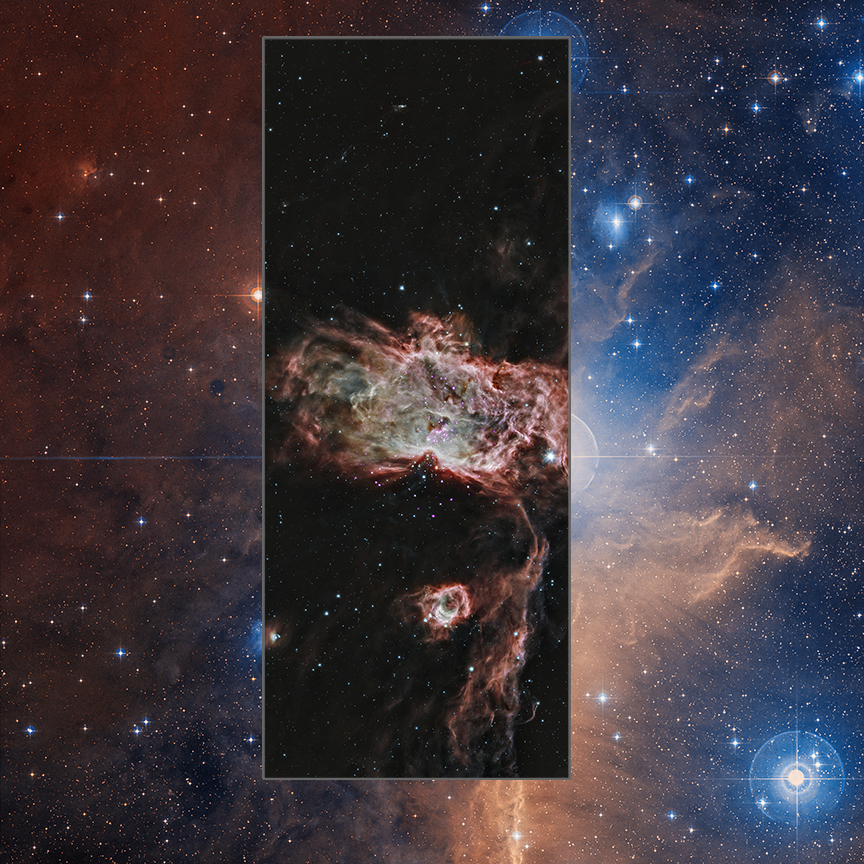
APOD: Inside the Flame Nebula

This image shows the Flame Nebula which is 1,400 light years away and consists of crowded star-forming regions toward Orion's Belt. The X-ray data from the Chandra Observatory and the infrared images from the Spitzer Space Telescope shows what is past the glowing gas and dust clouds. When scrolling over this image you can see the most recently formed stars. The youngest stars are in the center of the Flame Nebula. I think that it's interesting seeing this image of star formation in the Flame Nebula after we have learned about nebulae and star formation in astronomy class.


See Explanation.
Moving the cursor over the image will bring up an alternate version.
Clicking on the image will bring up the highest resolution version
available.

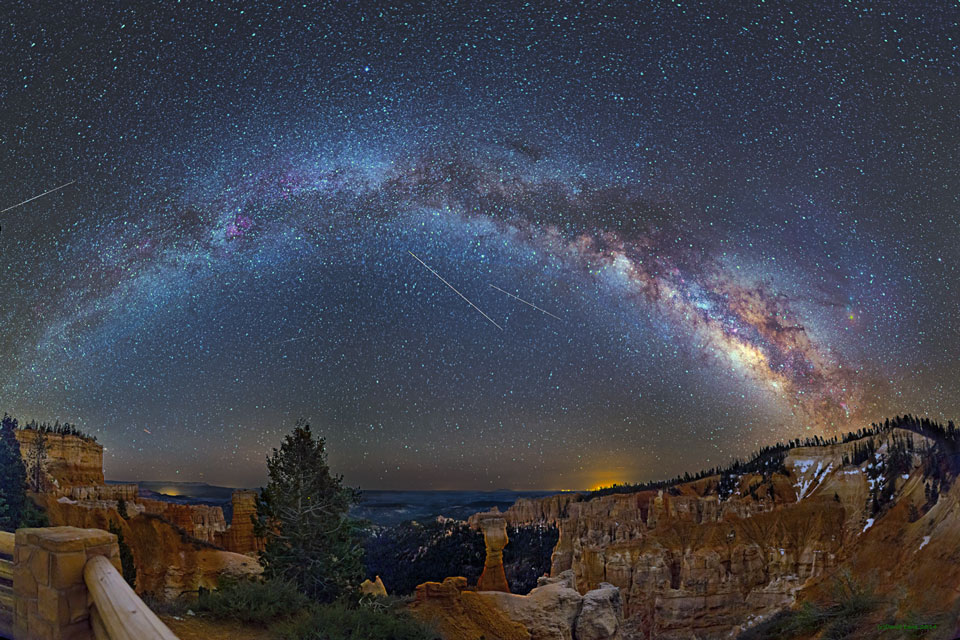
APOD: Meteors, Planes, and a Galaxy over Bryce Canyon

This picture was taken of Bryce Canyon in Utah. This location is famous for its rock structures. The landscape makes this the perfect place to photograph the arching central disk of our Milky Way Galaxy. This photo also features three planes, at least four Eta Aquariid meteors, and bright stars (including the summer triangle). This image is actually a panorama of 12 smaller images taken throughout early May. I think that this photograph is really beautiful. It's amazing being able to see so many things in our night sky.
See Explanation.  Clicking on the picture will download
 the highest resolution version available.

APOD: In the Center of Spiral Galaxy M61

M61 is found in the nearby Virgo Cluster of Galaxies. M61 has features found in many spiral galaxies like bright spiral arms, a central bar, dust lanes, and bright clusters of stars. M61 is similar to the Milky Way galaxy. M61 was discovered twice in the same day in the year 1779 although one astronomer mistook it for a comet. I found it interesting to learn that light from M61 takes 55 million years to reach Earth. This image was taken by the Hubble Space Telescope. It's amazing how detailed the image is.
See Explanation.  Clicking on the picture will download
 the highest resolution version available.

Thursday, May 22, 2014

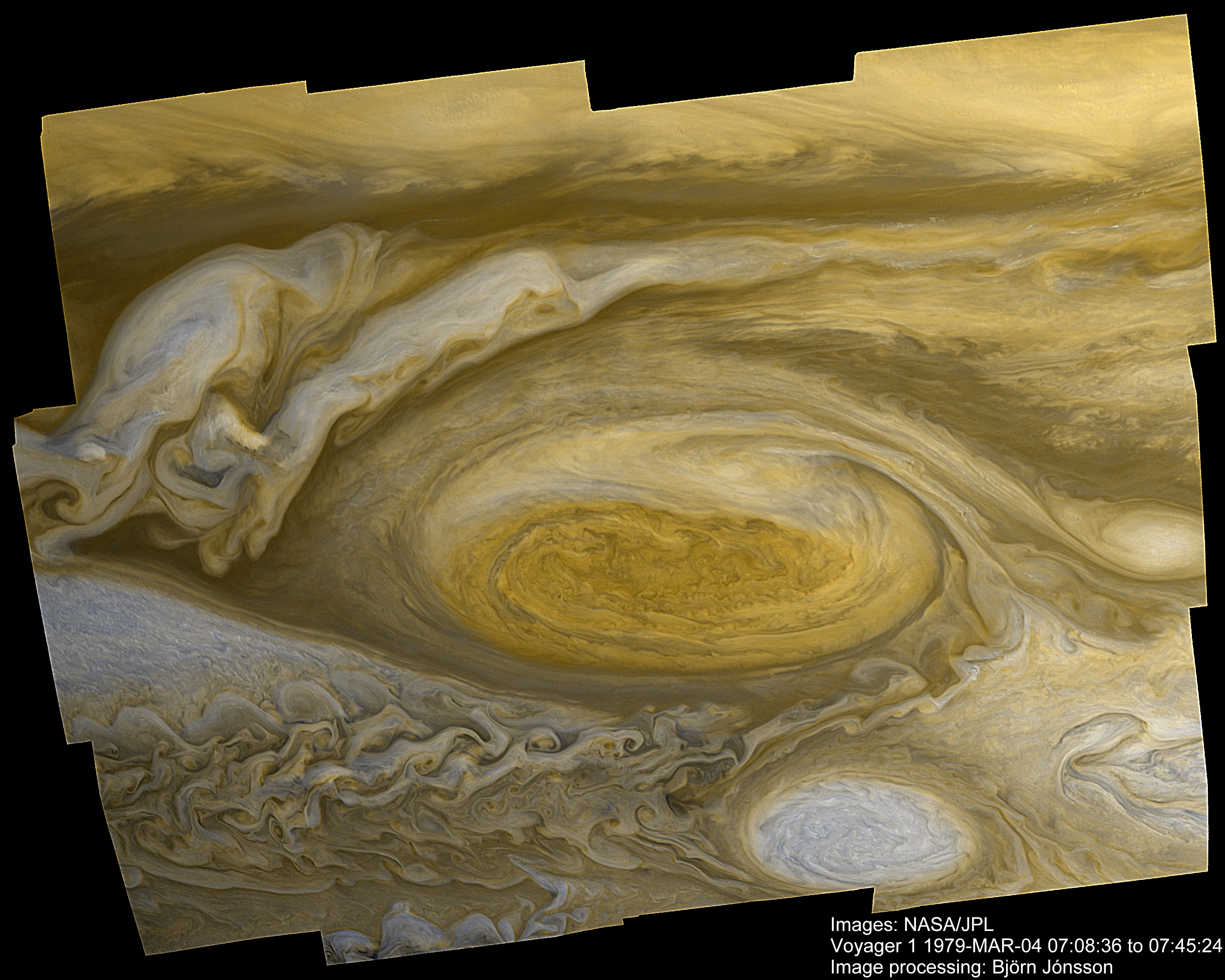
APOD: Jupiter's Great Red Spot from Voyager 1

Jupiter's Great Red Spot was recorded as shrinking in the nineteen thirties. However, it's size appears to have grown in the past few years. This spot is larger than Earth and is hurricane-like. This feature is still not completely understood though we see that small eddies feed into the storm system. This image was a digital enhancement of Jupiter's Great Red Spot taken in 1979 by the Voyager 1. I think that it's amazing that this photograph is so detailed. It's also astounding how astronomers are able to get pictures of the surface of Jupiter that are this clear.
See Explanation.  Clicking on the picture will download
 the highest resolution version available.

Friday, April 11, 2014

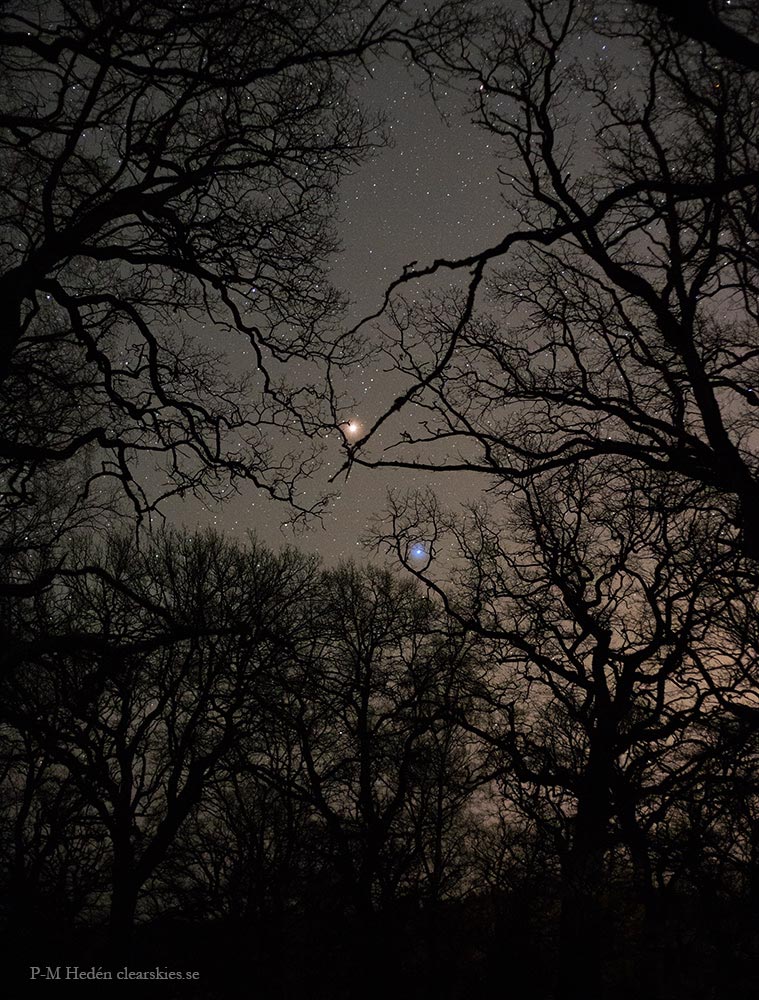
APOD: Mars Red and Spica Blue

Mars will reach its brightest of this year this week. Mars looks so bright because it is so close to Earth. Spica, in the constellation Virgo, shines constantly as one of the brightest blue stars in the sky. Spica is blue in color, while Mars is reddish. Spica and Mars were photographed together toward the southeast in Sweden after sunset through old oak trees. I have seen Mars and Spica in the night sky, but it's always interesting to see a picture of the night sky from a different location.
See Explanation.  Clicking on the picture will download
 the highest resolution version available.

APOD: Mars Near Opposition

Tonight Mars is between opposition and closest approach. The planet is looping through Virgo, opposite the Sun. This image was taken on April 3rd by a high-speed digital camera and 16-inch diameter telescope from Assis, Brazil. Mars' north polar cap is displayed in the photograph. You can clearly see whitish orographic clouds, which are water vapor clouds that are condensing in the cold atmosphere above Mars' volcanos. The night of closest approach will be April 14th or April 15th. I think that it is amazing that astronomers have telescopes and cameras that are advanced enough to create this clear image of Mars.

APOD: Lunar Farside

This is a photograph of the farside of the Moon. The Moon is tidally locked in synchronous rotation.The near side of the Moon is presented to us. However, the far side of the Moon can become seen. This picture is a mosaic from the Lunar Reconnaissance Orbiter's wide andgle camera is pointed towards the far side. The far side of the Moon looks very different than the near side. The far side is very rough and battered. The far side's crust is actually thicker, which makes it harder for molten material from the inside to flow to the surface and create a smooth maria. I think that this image is interesting because we mostly only see one side of the Moon.


See Explanation.  Clicking on the picture will download
 the highest resolution version available.

Sunday, March 30, 2014

Willem de Sitter

DeSitter.jpg


Willem de Sitter was born on May 6th, 1872 and died on November 20th, 1934. His parents were Lamoraal and Catherine de Sitter. His family had a tradition of becoming lawyers and while he was expected to follow the family tradition he became a mathematician and astronomer. In his lifetime de Sitter received several awards including the Gold Medal of the Royal Astronomical Society. The crater de Sitter on the moon and an asteroid were named in his honor.
He based his models of the universe on Albert Einstein's general theory of relativity. De Sitter studied math at the State University of Groningen and joined the astronomical laboratory there. Under J.C. Kapeteyn's guidance he developed a liking for astronomy. He spent several years in South Africa at the Cape Observatory. Later de Sitter became a professor of astronomy at the University of Leiden. In 1919 he became director of the Leiden Observatory where he analyzed the motions of Jupiter's four Galilean satellites in attempt to determine their masses. He published several papers in London that led to Arthur Eddington's expedition to observe a solar eclipse to measure the gravitational deflection of light rays passing near the Sun. 
In de Sitter's work he concluded that the universe is constantly expanding independently of matter. Later Einstein and de Sitter published a joint paper called the Einstein-de Sitter model of the universe in 1932. In their paper they present the concept of "dark matter" where light has not been emitted. De Sitter came up with an explanation to Einstein's general theory of relativity in his concept of the de Sitter space and the de Sitter universe. De Sitter's concept of expanding space became the basis of the Big Bang Theory. Sitter died of pneumonia at the age of sixty-two in Leiden.

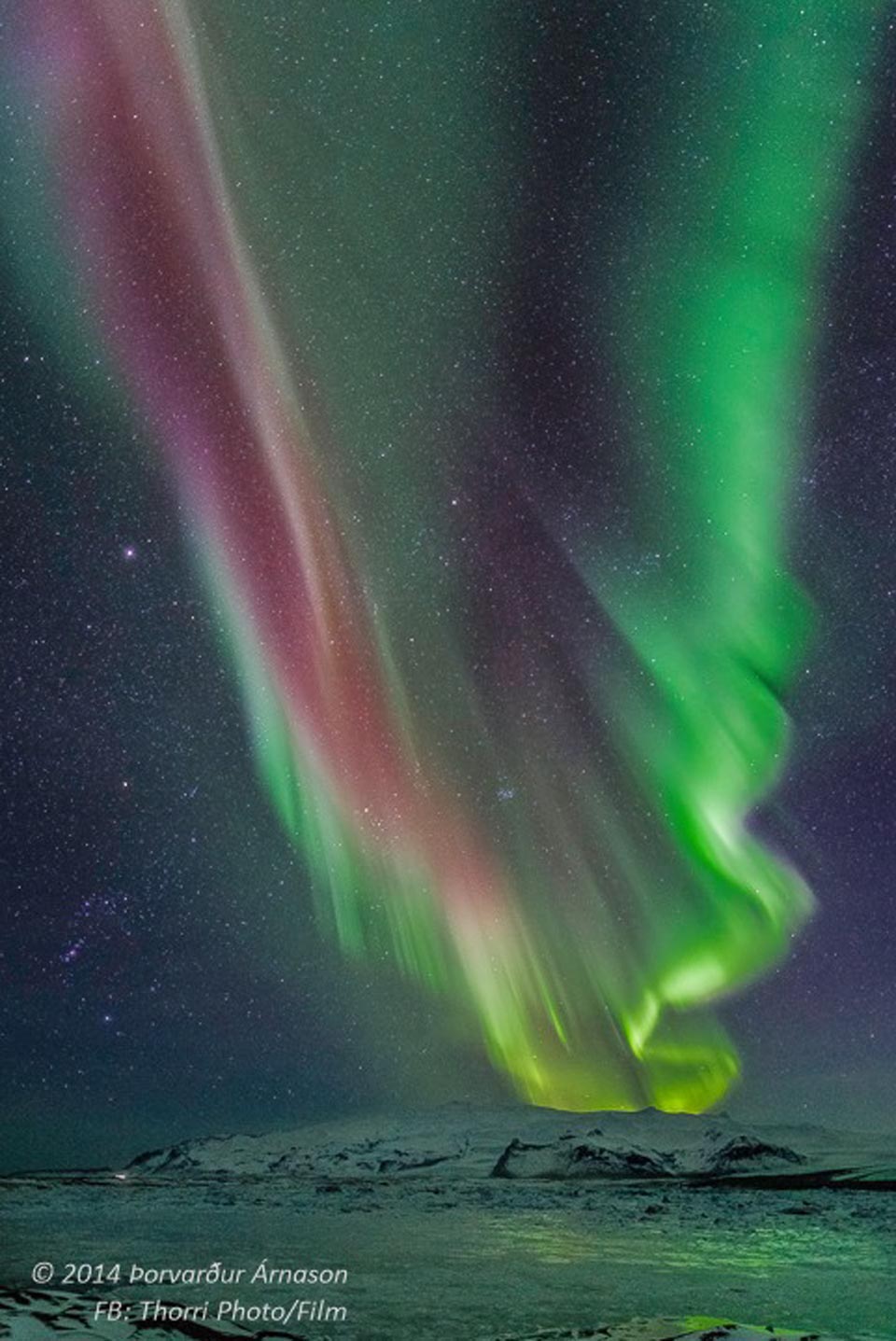
APOD: Orion and Aurora Over Iceland


This is a picture of the Iceland sky full of aurora over a month ago. On the ground of the picture is the stratovolcano  Ã–ræfajökullThe constellation of Orion lies in the sky next to the aurora. Auroras are caused by the impacted of energetic particles from the Sun hitting the Earth's magnetic environment. Protons and electrons hit the air near the poles and cause winds and light display. I always loved auroras and I thought that it was interesting learning how they form. 

See Explanation.  Clicking on the picture will download
 the highest resolution version available.

Sunday, March 2, 2014

Observation

Date: 1 March, 2014
Time: 7:00 - 8:00 PM (2 hours)
Place: Pine View School (Astronomy Night)
Sky Conditions: Clear
Instruments Used: Naked eye, Binoculars 
Planets: Jupiter (in Gemini)
Bright Stars: Pollux, Castor, Rigel, Betelgeuse, Sirius
Constellations Noted: Taurus, Perseus, Auriga, Orion, Gemini, Canis Minor, Leo, Canis Major
Binary Stars: Algol, Sirius
Deep Sky Objects: 
Other: I saw star clusters Hyades and Pleiades using the binoculars. I also observed a few satellites.

Thursday, February 20, 2014

Quarter 3 Astronomer Bio Sources

http://www.britannica.com/EBchecked/topic/546850/Willem-de-Sitter
http://www-history.mcs.st-and.ac.uk/Biographies/Sitter.html
http://en.wikipedia.org/wiki/Willem_de_Sitter
http://www.nndb.com/people/209/000168702/
http://www.infoplease.com/encyclopedia/people/sitter-willem-de.html

Monday, February 17, 2014

Observation

Date: 16 February, 2014
Time: 8:00 - 9:00 PM
Place: My house
Sky Conditions: Clear
Instruments Used: Naked eye
Planets: Jupiter
Bright Stars: Polaris, Pollux, Castor, Rigel
Constellations Noted: Pegasus, Andromeda, Cetus, Cassiopeia, Aquarius, Aries, Taurus, Auriga, Orion, Gemini
Binary Stars
Deep Sky Objects: 
Other: I could tell the general area where Monoceros would be located

Observation

Date: 15 February, 2014
Time: 8:00 - 9:00 PM
Place: My house
Sky Conditions: Mostly Clear
Instruments Used: Naked eye
Planets: Jupiter
Bright Stars: Polaris, Rigel, Sirius, Castor/Pollux
Constellations Noted: Gemini, Taurus, Aries, Andromeda, Cetus, Cassiopeia, Aquarius, Pegasus, Auriga, Orion, 
Binary Stars
Deep Sky Objects: Orion's Belt
Other: I could tell the general area wherethe constellation of Monoceros would be

Observation

Date: 14 February, 2014
Time: 8:00 - 9:00 PM
Place: My house
Sky Conditions: Clear
Instruments Used: Naked eye
Planets: Jupiter
Bright Stars: Polaris, Betelgeuse, Rigel, Sirius
Constellations Noted: Perseus, Phoenix, Canis Minor, Cetus, Auriga, Cetus, Cassiopeia, Andromeda, Aries, Taurus, Pegasus, Orion, Gemini
Binary Stars
Deep Sky Objects: stars in Orion's Belt
Other: 

Observation

Date: 13 February, 2014
Time: 8:00 - 9:00 PM
Place: My house
Sky Conditions: Clear
Instruments Used: Naked eye
Planets: Jupiter
Bright Stars: Polaris, Betelgeuse, Rigel, Sirius
Constellations Noted: Pegasus, Andromeda, Cetus, Cassiopeia,Aquarius, Aries, Taurus, Auriga, Orion, Gemini
Binary Stars
Deep Sky Objects: Orion's Belt (3 stars), general area where Horsehead Nebula would be located
Other: I could tell the general area wherethe constellation of Monoceros would be

Friday, January 24, 2014

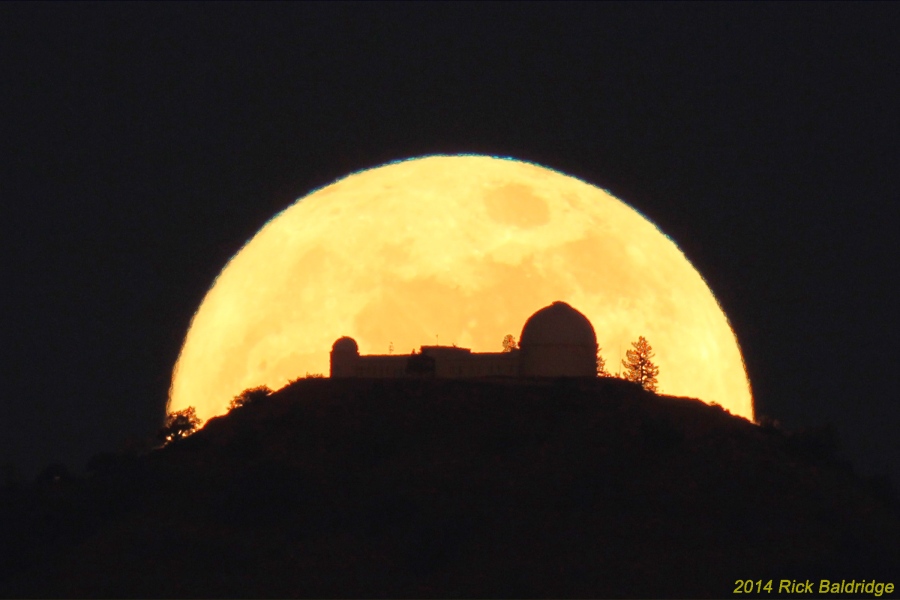
APOD: Apogee's Full Moon

This is a picture of the full moon over the Lick Observatory last Wednesday night. This moon reached its full phase on January 16th, 4:54 UT. The moon reached this phase within two hours of apogee, where it was at its most distant point in its elliptical orbit around the Earth. This was the smallest full moon of 2014 and the smallest full moon in the last 1,000 years. The difference in size between the biggest and smallest full moons is not easy to discern because the difference in distance between the closest point in the moon's orbit, or the lunar apogee and perigee, is only 50,000 kilometers while the average distance of the moon is about 385,000 kilometers. I think that it's interesting that this will remain the smallest full moon until it is close to apogee again in 2154.

See Explanation.  Clicking on the picture will download
 the highest resolution version available.
http://apod.nasa.gov/apod/ap140118.html

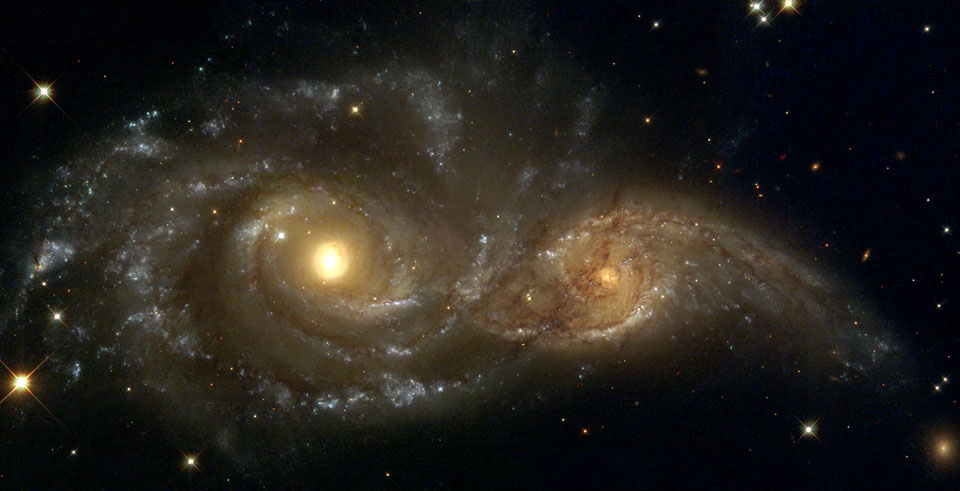
APOD: Spiral Galaxies in Collision

Spiral galaxies NGC 2207 and IC 2163 will slowly pull each other apart until billions of years from now there will only be one left. These galaxies will create tides of matter, sheets of shocked gas, lanes of dark dust, bursts of star formation, and streams of castaway stars. Astronomers think that the larger galaxy, NGC 2207 (on the left), will "swallow" the galaxy on the right. The space between stars is so vast that usually the stars will not collide when the galaxies do. I had no idea that galaxies collided like this. I find the image and description intruiging. 

See Explanation.  Clicking on the picture will download
 the highest resolution version available.
http://apod.nasa.gov/apod/ap140119.html

Friday, January 17, 2014

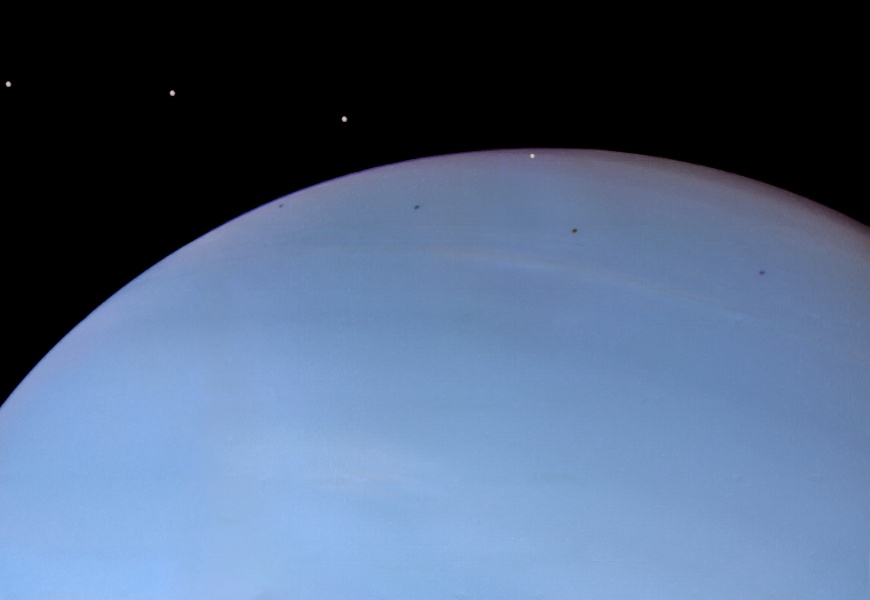
APOD: Despina, Moon of Neptune

This image shows Neptune's tiny moon Despina in orbit. Despina was discovered in 1989 by Voyager 2 and is 148 kilometers across. Philosophy professor Ted Stryk discovered images showing Despina's shadow on Neptune's cloudy atmosphere in Voyager 2 data from 20 years earlier. This composite view of Despina shows four frames over the course of nine minutes. This moon was brightened so it is easier to see. Despina is the daughter of Neptune in Roman mythology. I was glad to come across this photograph of Neptune's moon because I did Neptune for my solar system project last quarter. I think that it's really interesting that the details in this photograph were found 20 years after it was first taken.


See Explanation.  Clicking on the picture will download
 the highest resolution version available.

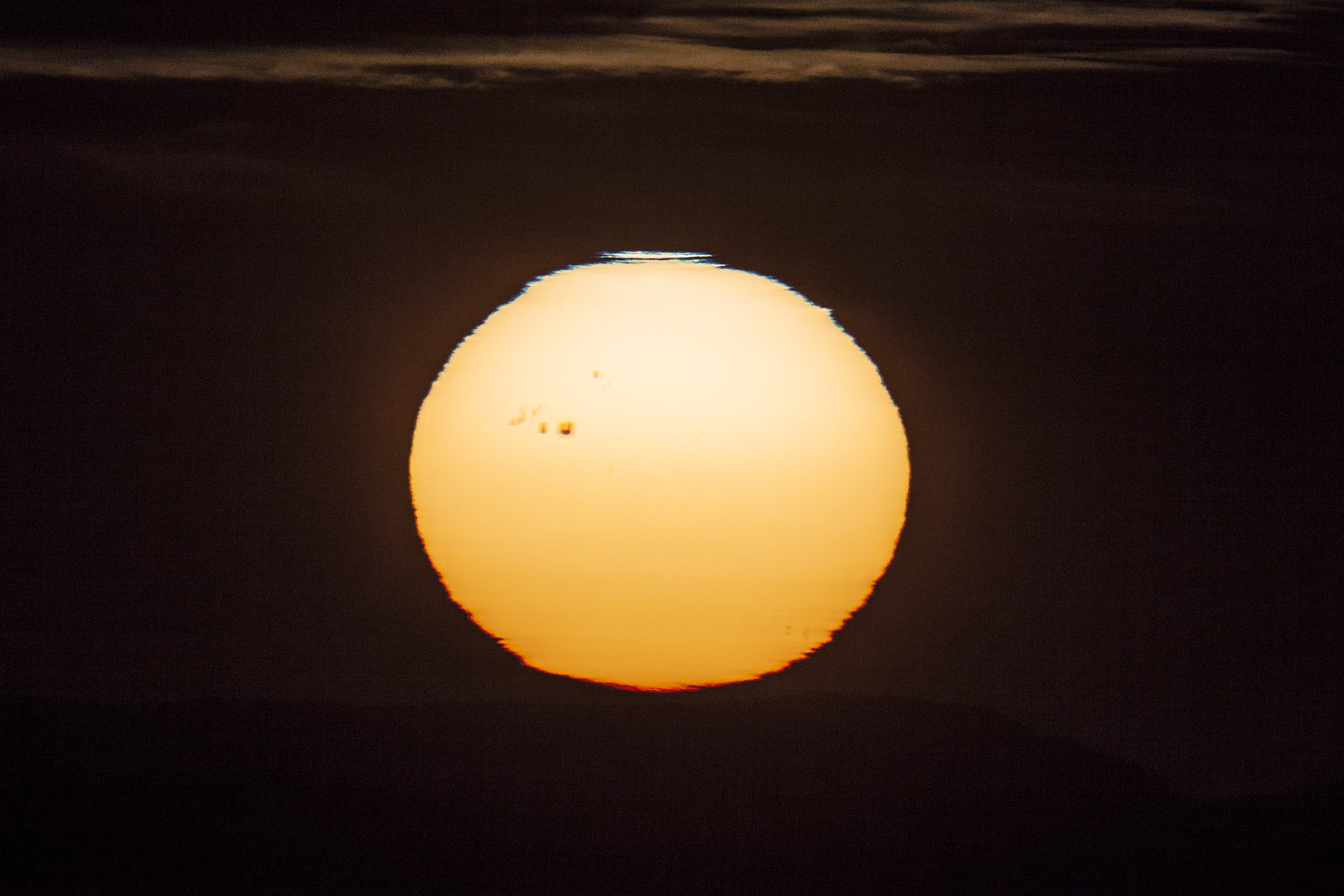
APOD: Sunspot at Sunset

This sunspot captured in Switzerland was so large that it was visible with the naked eye. This photograph was captured on January 5th. While the sunspot was dimmed and blurred by Earth's atmosphere, it was still visible. More detailed views show that the solar active region is larger than the Earth.This sunspot produced a coronal mass ejection and a solar flare. This may have caused geomagnetic storms and aurora. I figured that this APOD was very relevant to the chapter that we are currently on in Astronomy class. I recognize terms like coronal mass ejection, sunspot, and solar flare from the chapter.

See Explanation.  Clicking on the picture will download
 the highest resolution version available.

Thursday, January 9, 2014

Observation

Date: 20 December, 2013
Time: 8:00 - 9:00 PM
Place: My house
Sky Conditions: Clear
Instruments Used: Naked eye, Binocular
Planets: Venus
Bright Stars: Vega, Altair, Deneb, Polaris
Constellations Noted: Cygnus, Aquila, Vulpecula, Sagittarius, Scorpius, Ursa Minor, Ursa Major, Draco, Cetus, Phoenix, Hercules, Cepheus, Lyra, Cassiopeia, Andromeda, Camelopardalis, Serpens, Aquarius
Binary Stars: M27, M11, M13
Deep Sky Objects: 
Other:

Observation

Date: 18 December, 2013
Time: 8:30 - 9:00 PM
Place: My house
Sky Conditions: Clear
Instruments Used: Naked eye
Planets: Venus
Bright Stars: Vega, Altair, Deneb, Polaris
Constellations Noted: Cygnus, Aquila, Vulpecula, Sagittarius, Scorpius, Ursa Minor, Ursa Major, Draco, Cetus, Phoenix, Hercules, Cepheus, Lyra, Cassiopeia, Andromeda, Camelopardalis, Serpens, Aquarius
Binary Stars
Deep Sky Objects: 
Other:

Observation

Date: 4 December, 2013
Time: 8:30 - 9:00 PM
Place: My house
Sky Conditions: Partly cloudy
Instruments Used: Naked eye
Planets: Venus
Bright Stars: Altair, Deneb, Polaris
Constellations Noted: Aquila, Vulpecula, Sagittarius, Scorpius, Ursa Minor, Ursa Major, Draco, Cetus, Phoenix, Hercules, Cepheus, Lyra, Cassiopeia, Andromeda
Binary Stars
Deep Sky Objects: 
Other:

Observation

Date: 25 November, 2013
Time: 8:00 - 9:00 PM
Place: My house
Sky Conditions: Mostly clear
Instruments Used: Naked eye, Binoculars
Planets: Venus
Bright Stars: Altair, Deneb, Polaris
Constellations Noted: Aquila, Vulpecula, Cygnus, Sagittarius, Scorpius, Pegasus, Delphinus, Hercules, Cepheus, Lyra, Sagitta, Delphinus, Corona Borealis, Capricorn, Cassiopeia, Andromeda
Binary Stars: Alberio
Deep Sky Objects: M27
Other:

It's hard to see a lot from my house but the binoculars really help. The sky started to clear up at around 8:30.


Observation

Date: 13 November, 2013
Time: 8:30 - 9:00 PM
Place: My house
Sky Conditions: Clear
Instruments Used: Naked eye, Binoculars
Planets: Venus
Bright Stars: Altair, Deneb, Polaris
Constellations Noted: Corona Borealis, Delphinus, Scorpius, Sagittarius, Vulpecula, Aquila, Delphinus, Capricorn, Cepheus, Lyra, Sagitta, Cygnus, Pegasus, Hercules
Binary Stars: Alberio
Deep Sky Objects: M27; M11
Other:

The binoculars were really helpful in discovering deep sky objects and binary stars. 

Observation

Date: 4 November, 2013
Time: 8:00 - 9:00 PM
Place: My house
Sky Conditions: Mostly clear
Instruments Used: Naked eye
Planets: Venus
Bright Stars: Vega, Altair, Deneb
Constellations Noted: Cygnus, Delphinus, Vulpecula, Sagittarius, Aquila, Aquarius, Capricorn, Lyra, Scorpius, Pegasus, Hercules
Binary Stars:
Deep Sky Objects:
Other: the Moon, Milky Way, Brocchi's Cluster

Due to the mostly clear night I was able to observe the Milky Way. Brocchi's Cluster looks like a coathanger.


Wednesday, January 8, 2014

Nevil Maskelyne

Nevil Maskelyne was born in London, England on October 6th, 1732. His full title was Revered Dr. Nevil Maskelyne. His interest in Astronomy began when he attended Westminster School after the eclipse of July 25, 1748. He entered Trinity College in Cambridge in 1749. When he graduated he was ordained as minister. In 1758 he was admitted into the Royal Society. He was a Fellow of Trinity College, Cambridge and a Fellow of the Royal Society. He married Sophia Rose and had one child named Margaret. He was dispatched on the island of St. Helena to observe the transit of Venus. Though bad weather prevented any useful observations Maskelyne created the method of measurement of longitude. Maskelyne published the lunar method for determining longitude in The British Mariner’s Guide. In 1765 he was appointed Astronomer Royal. He wrote his first volume of Nautical Almanac in 1766. He later created a measurement of latitude and proposed the Schiehallion experiment to the Royal Society to determine Earth’s density using a plumb line. Schiehallion, the mountain, was chosen due to its conical shape so its volume could be determined accurately. In result of his observations it was later found that the Earth’s density is approximately 4.5 times that of water. In 1775 he was awarded the Copley medal of the Royal Society for his work. Nevil Maskelyne died July 20th, 1811 in Greenwich, England.


Maskelyne Nevil.jpg

Sources:
http://en.wikipedia.org/wiki/Nevil_Maskelyne
http://www-history.mcs.st-and.ac.uk/Biographies/Maskelyne.html
http://www.britannica.com/EBchecked/topic/367964/Nevil-Maskelyne