Friday, January 24, 2014

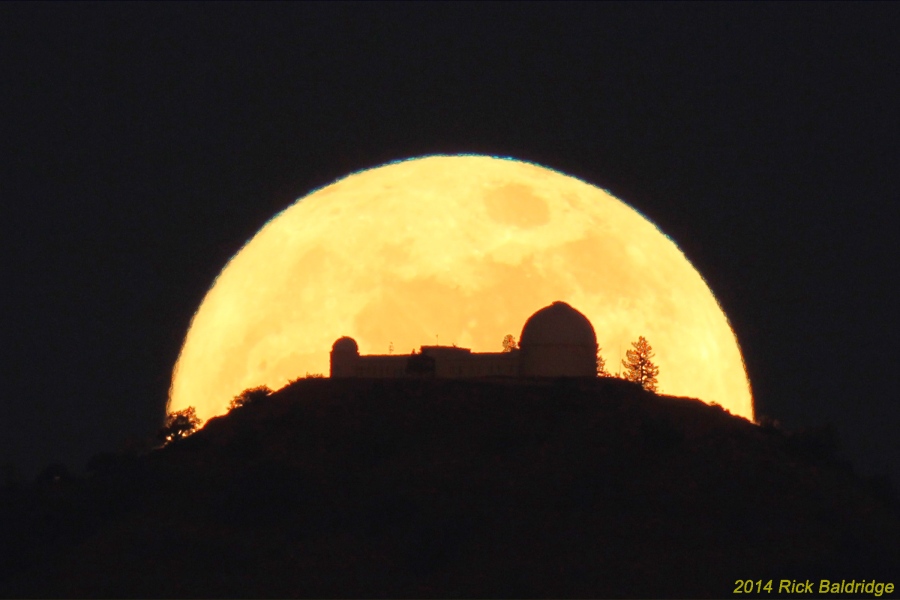
APOD: Apogee's Full Moon

This is a picture of the full moon over the Lick Observatory last Wednesday night. This moon reached its full phase on January 16th, 4:54 UT. The moon reached this phase within two hours of apogee, where it was at its most distant point in its elliptical orbit around the Earth. This was the smallest full moon of 2014 and the smallest full moon in the last 1,000 years. The difference in size between the biggest and smallest full moons is not easy to discern because the difference in distance between the closest point in the moon's orbit, or the lunar apogee and perigee, is only 50,000 kilometers while the average distance of the moon is about 385,000 kilometers. I think that it's interesting that this will remain the smallest full moon until it is close to apogee again in 2154.

See Explanation.  Clicking on the picture will download
 the highest resolution version available.
http://apod.nasa.gov/apod/ap140118.html

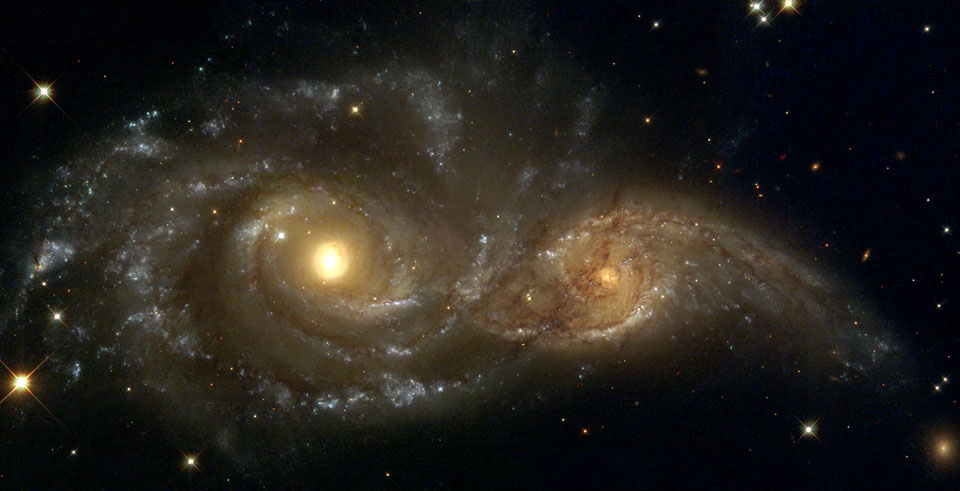
APOD: Spiral Galaxies in Collision

Spiral galaxies NGC 2207 and IC 2163 will slowly pull each other apart until billions of years from now there will only be one left. These galaxies will create tides of matter, sheets of shocked gas, lanes of dark dust, bursts of star formation, and streams of castaway stars. Astronomers think that the larger galaxy, NGC 2207 (on the left), will "swallow" the galaxy on the right. The space between stars is so vast that usually the stars will not collide when the galaxies do. I had no idea that galaxies collided like this. I find the image and description intruiging. 

See Explanation.  Clicking on the picture will download
 the highest resolution version available.
http://apod.nasa.gov/apod/ap140119.html

Friday, January 17, 2014

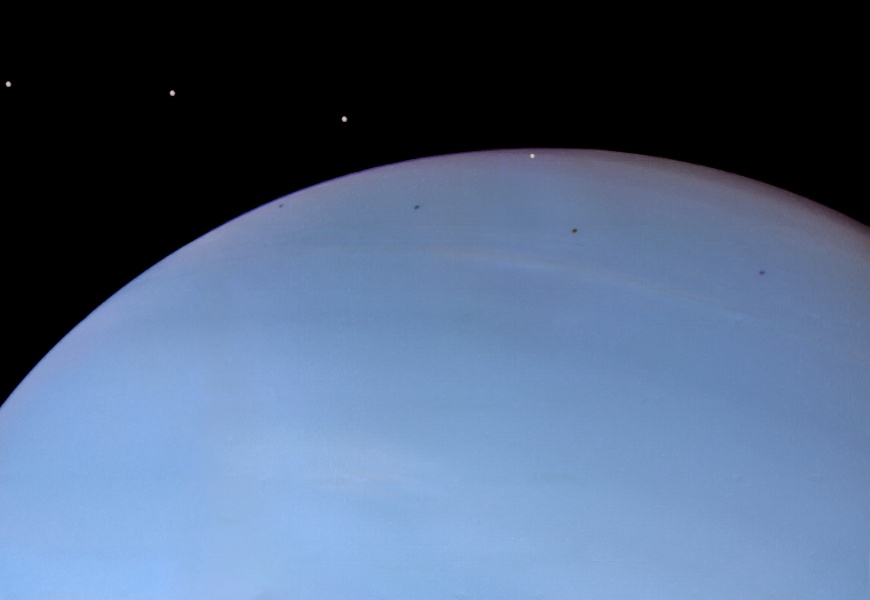
APOD: Despina, Moon of Neptune

This image shows Neptune's tiny moon Despina in orbit. Despina was discovered in 1989 by Voyager 2 and is 148 kilometers across. Philosophy professor Ted Stryk discovered images showing Despina's shadow on Neptune's cloudy atmosphere in Voyager 2 data from 20 years earlier. This composite view of Despina shows four frames over the course of nine minutes. This moon was brightened so it is easier to see. Despina is the daughter of Neptune in Roman mythology. I was glad to come across this photograph of Neptune's moon because I did Neptune for my solar system project last quarter. I think that it's really interesting that the details in this photograph were found 20 years after it was first taken.


See Explanation.  Clicking on the picture will download
 the highest resolution version available.

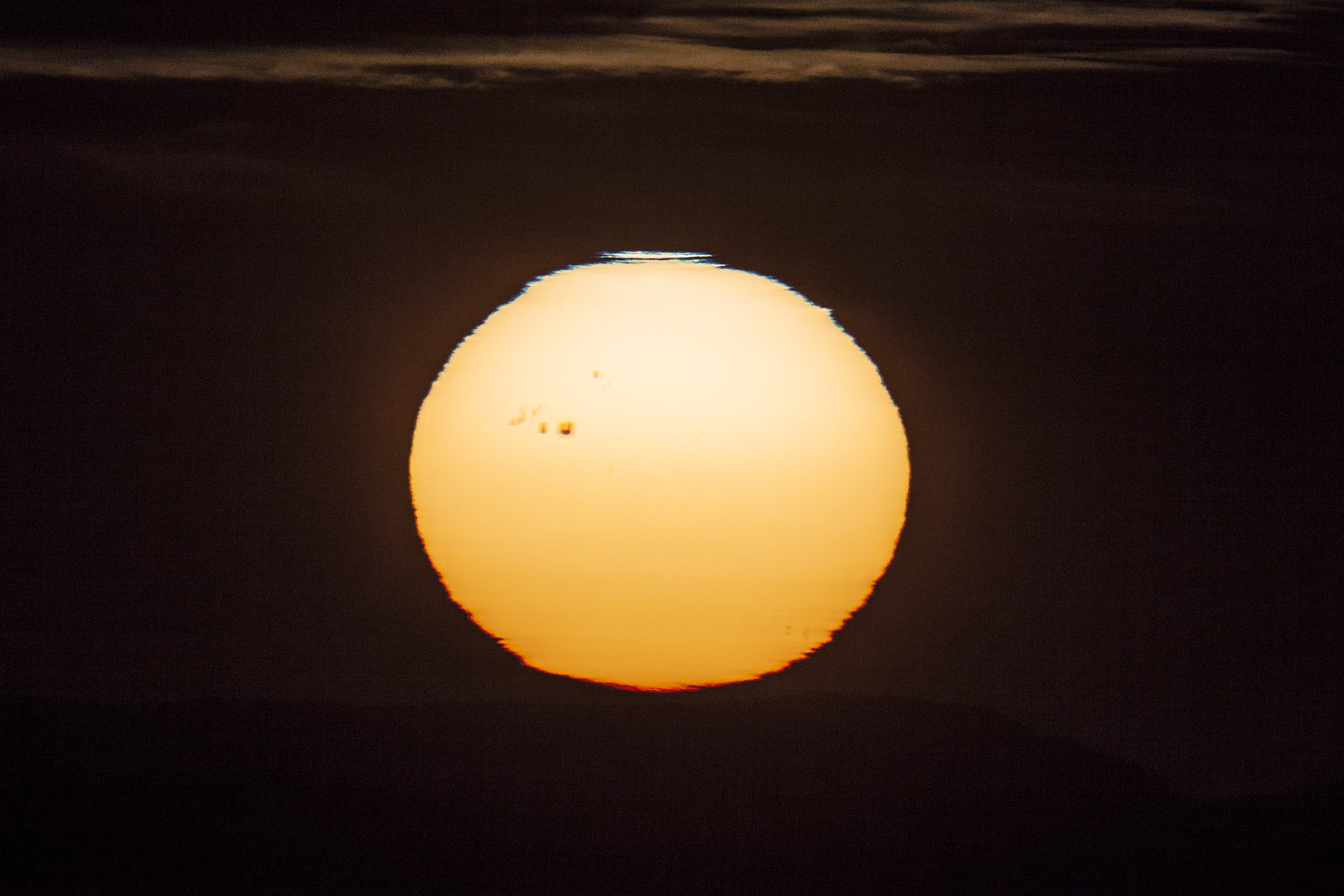
APOD: Sunspot at Sunset

This sunspot captured in Switzerland was so large that it was visible with the naked eye. This photograph was captured on January 5th. While the sunspot was dimmed and blurred by Earth's atmosphere, it was still visible. More detailed views show that the solar active region is larger than the Earth.This sunspot produced a coronal mass ejection and a solar flare. This may have caused geomagnetic storms and aurora. I figured that this APOD was very relevant to the chapter that we are currently on in Astronomy class. I recognize terms like coronal mass ejection, sunspot, and solar flare from the chapter.

See Explanation.  Clicking on the picture will download
 the highest resolution version available.

Thursday, January 9, 2014

Observation

Date: 20 December, 2013
Time: 8:00 - 9:00 PM
Place: My house
Sky Conditions: Clear
Instruments Used: Naked eye, Binocular
Planets: Venus
Bright Stars: Vega, Altair, Deneb, Polaris
Constellations Noted: Cygnus, Aquila, Vulpecula, Sagittarius, Scorpius, Ursa Minor, Ursa Major, Draco, Cetus, Phoenix, Hercules, Cepheus, Lyra, Cassiopeia, Andromeda, Camelopardalis, Serpens, Aquarius
Binary Stars: M27, M11, M13
Deep Sky Objects: 
Other:
Observation

Date: 18 December, 2013
Time: 8:30 - 9:00 PM
Place: My house
Sky Conditions: Clear
Instruments Used: Naked eye
Planets: Venus
Bright Stars: Vega, Altair, Deneb, Polaris
Constellations Noted: Cygnus, Aquila, Vulpecula, Sagittarius, Scorpius, Ursa Minor, Ursa Major, Draco, Cetus, Phoenix, Hercules, Cepheus, Lyra, Cassiopeia, Andromeda, Camelopardalis, Serpens, Aquarius
Binary Stars
Deep Sky Objects: 
Other:

Observation

Date: 4 December, 2013
Time: 8:30 - 9:00 PM
Place: My house
Sky Conditions: Partly cloudy
Instruments Used: Naked eye
Planets: Venus
Bright Stars: Altair, Deneb, Polaris
Constellations Noted: Aquila, Vulpecula, Sagittarius, Scorpius, Ursa Minor, Ursa Major, Draco, Cetus, Phoenix, Hercules, Cepheus, Lyra, Cassiopeia, Andromeda
Binary Stars
Deep Sky Objects: 
Other:

Observation

Date: 25 November, 2013
Time: 8:00 - 9:00 PM
Place: My house
Sky Conditions: Mostly clear
Instruments Used: Naked eye, Binoculars
Planets: Venus
Bright Stars: Altair, Deneb, Polaris
Constellations Noted: Aquila, Vulpecula, Cygnus, Sagittarius, Scorpius, Pegasus, Delphinus, Hercules, Cepheus, Lyra, Sagitta, Delphinus, Corona Borealis, Capricorn, Cassiopeia, Andromeda
Binary Stars: Alberio
Deep Sky Objects: M27
Other:

It's hard to see a lot from my house but the binoculars really help. The sky started to clear up at around 8:30.


Observation

Date: 13 November, 2013
Time: 8:30 - 9:00 PM
Place: My house
Sky Conditions: Clear
Instruments Used: Naked eye, Binoculars
Planets: Venus
Bright Stars: Altair, Deneb, Polaris
Constellations Noted: Corona Borealis, Delphinus, Scorpius, Sagittarius, Vulpecula, Aquila, Delphinus, Capricorn, Cepheus, Lyra, Sagitta, Cygnus, Pegasus, Hercules
Binary Stars: Alberio
Deep Sky Objects: M27; M11
Other:

The binoculars were really helpful in discovering deep sky objects and binary stars. 

Observation

Date: 4 November, 2013
Time: 8:00 - 9:00 PM
Place: My house
Sky Conditions: Mostly clear
Instruments Used: Naked eye
Planets: Venus
Bright Stars: Vega, Altair, Deneb
Constellations Noted: Cygnus, Delphinus, Vulpecula, Sagittarius, Aquila, Aquarius, Capricorn, Lyra, Scorpius, Pegasus, Hercules
Binary Stars:
Deep Sky Objects:
Other: the Moon, Milky Way, Brocchi's Cluster

Due to the mostly clear night I was able to observe the Milky Way. Brocchi's Cluster looks like a coathanger.


Wednesday, January 8, 2014

Nevil Maskelyne

Nevil Maskelyne was born in London, England on October 6th, 1732. His full title was Revered Dr. Nevil Maskelyne. His interest in Astronomy began when he attended Westminster School after the eclipse of July 25, 1748. He entered Trinity College in Cambridge in 1749. When he graduated he was ordained as minister. In 1758 he was admitted into the Royal Society. He was a Fellow of Trinity College, Cambridge and a Fellow of the Royal Society. He married Sophia Rose and had one child named Margaret. He was dispatched on the island of St. Helena to observe the transit of Venus. Though bad weather prevented any useful observations Maskelyne created the method of measurement of longitude. Maskelyne published the lunar method for determining longitude in The British Mariner’s Guide. In 1765 he was appointed Astronomer Royal. He wrote his first volume of Nautical Almanac in 1766. He later created a measurement of latitude and proposed the Schiehallion experiment to the Royal Society to determine Earth’s density using a plumb line. Schiehallion, the mountain, was chosen due to its conical shape so its volume could be determined accurately. In result of his observations it was later found that the Earth’s density is approximately 4.5 times that of water. In 1775 he was awarded the Copley medal of the Royal Society for his work. Nevil Maskelyne died July 20th, 1811 in Greenwich, England.


Maskelyne Nevil.jpg

Sources:
http://en.wikipedia.org/wiki/Nevil_Maskelyne
http://www-history.mcs.st-and.ac.uk/Biographies/Maskelyne.html
http://www.britannica.com/EBchecked/topic/367964/Nevil-Maskelyne