Saturday, May 24, 2014

Observation

Date: May 23rd, 2014
Time: 9:00 - 9:30 PM
Place: My house
Sky Conditions: Clear
Instruments Used: Naked eye, Phone app
Planets: 
Bright Stars: Polaris, Alpha Centauri, Beta Centauri, Capella, Regulus, Castor, Pollux
Constellations Noted: Centaurus, Gemini, Virgo, Auriga, Leo, Ursa Major, Ursa Minor, Bootes
Binary Stars
Deep Sky Objects: 
Other: Moon phase is waning crescent

Observation

Date: May 22nd, 2014
Time: 8:00 - 9:00 PM
Place: My house
Sky Conditions: Partly Cloudy
Instruments Used: Naked eye
Planets: 
Bright Stars: Polaris, Alpha Centauri, Beta Centauri, Capella, Regulus, Castor, Pollux
Constellations Noted: Leo, Centaurus, Gemini, Auriga, Ursa Major, Ursa Minor, Bootes
Binary Stars
Deep Sky Objects: 
Other: Moon phase is waning crescent

Observation

Date: May 16th, 2014
Time: 8:00 - 8:30 PM
Place: My house
Sky Conditions: Mostly Clear
Instruments Used: Naked eye, Phone app
Planets: Jupiter, Mars
Bright Stars: Polaris, Alpha Centauri, Beta Centauri, Castor, Pollux, Regulus
Constellations Noted: Centaurus, Virgo, Gemini, Ursa Major, Ursa Minor, Bootes, Leo
Binary Stars
Deep Sky Objects: 
Other: Using the app on my phone I found that Jupiter is in the constellation Gemini and Mars is in Virgo.

Observation

Date: May 15th, 2014
Time: 9:00 - 9:30 PM
Place: My house
Sky Conditions: Mostly Clear
Instruments Used: Naked eye
Planets: 
Bright Stars: Polaris, Alpha Centauri, Beta Centauri, Regulus
Constellations Noted: Gemini, Centaurus, Virgo, Ursa Major, Ursa Minor, Bootes, Leo
Binary Stars
Deep Sky Objects: 
Other: Moon phase was full

Observation

Date: May 3rd, 2014
Time: 8:00 - 9:00 PM
Place: My house
Sky Conditions: Clear
Instruments Used: Naked eye
Planets: 
Bright Stars: Polaris, Spica, Alpha Centauri, Beta Centauri, Regulus, Cor Caroli
Constellations Noted: Centaurus, Virgo, Ursa Major, Ursa Minor, Bootes, Leo, Canes Venatici
Binary Stars
Deep Sky Objects: 
Other: Moon phase is waxing crescent

Observations

Date: May 2nd, 2014
Time: 8:00 - 8:30 PM
Place: My house
Sky Conditions: Mostly Clear
Instruments Used: Naked eye
Planets: 
Bright Stars: Polaris, Alpha Centauri, Beta Centauri, Regulus
Constellations Noted: Centaurus, Virgo, Ursa Major, Ursa Minor, Bootes, Leo
Binary Stars
Deep Sky Objects: 
Other: the Sickle

Quarter 4 Astronomer Bio Sources

Works Cited
Goldberg, Jesse. "Power and Transgression in Twelfth Night and Measure for Measure: Artifice and Ideology as Tools of the Elite." RSS. Student Pulse, n.d. Web. 20 May 2014. <http://www.studentpulse.com/articles/581/power-and-transgression-in-twelfth-ni>.
"John Dobson (amateur Astronomer)." Wikipedia. Wikimedia Foundation, n.d. Web. 24 May 2014. <http://en.wikipedia.org/wiki/John_Dobson_%28amateur_astronomer%29>.
"John Dobson, Inventor of the Popular Dobsonian Telescope, Dead at 98." Universe Today RSS. N.p., n.d. Web. 24 May 2014. <http://www.universetoday.com/108150/john-dobson-inventor-of-the-popular-dobsonian-telescope-dead-at-98/>.
"John Dobson-A Brief Biography." Sidewalk Astronomers. N.p., n.d. Web. <http://www.sidewalkastronomers.us/id32.html>.
Woo, Elaine. "John Dobson, Evangelist for Amateur Astronomy, Dies at 98." Washington Post. The Washington Post, 30 Jan. 2014. Web. 24 May 2014. <http://www.washingtonpost.com/national/health-science/john-dobson-evangelist-for-amateur-astronomy-dies-at-98/2014/01/21/1901f2de-82a2-11e3-8099-9181471f7aaf_story.html>.

John Dobson

John Dobson  was born on September 14, 1915 in Beijing, China. He moved to San Francisco in 1927. Dobson became interested in the workings of the universe. He earned a masters degree in chemistry at the University of California, Berkeley in 1943. Dobson attended a lecture by a Vedantan swami. In the same year Dobson joined the Vendantan Society monastery in San Francisco. He became a monk of the Ramakrishna order. At the monastery he was expected to show that astronomy and the teachings of the Vedanta were compatible. There Dobson began to build telescopes. He corresponded with those outside of the monastery who were also interested in astronomy. After a while Dobson was given the choice of either to stop building telescopes or leave the monastery. While Dobson chose to remain at the monastery he was expelled in 1967 after being falsely accused of rejecting the swami's teachings. 
Dobson was an amateur astronomer best known for his Dobsonian Telescope. The Dobsonian Telescope is a portable, low cost Newtonian reflector telescope. It's invention was revolutionary because it allowed amateur astronomers to build their own large telescopes. He was also co-founder of the San Francisco Sidewalk Astronomers; an amateur astronomical group. 
Later Dobson spoke at a Vedanta Society of Southern California in Hollywood. He spent two months each year there teaching telescope and cosmology classes. Dobson did not support the Big Bang model. Instead he believed in a "recycling" steady state model where the universe is expanding outward forever but also recycles through quantum tunneling. Dobson expressed his opinions in his essay "Origins". In 2004 the Crater Lake Institute presented Dobson with the Annual Award for Excellence in Public Service for introducing sidewalk astronomy to national parks. He was also noted in the Smithsonian magazine for his accomplishments. John Dobson died on January 15, 2014 in Burbank, California. 

APOD: Inside the Flame Nebula

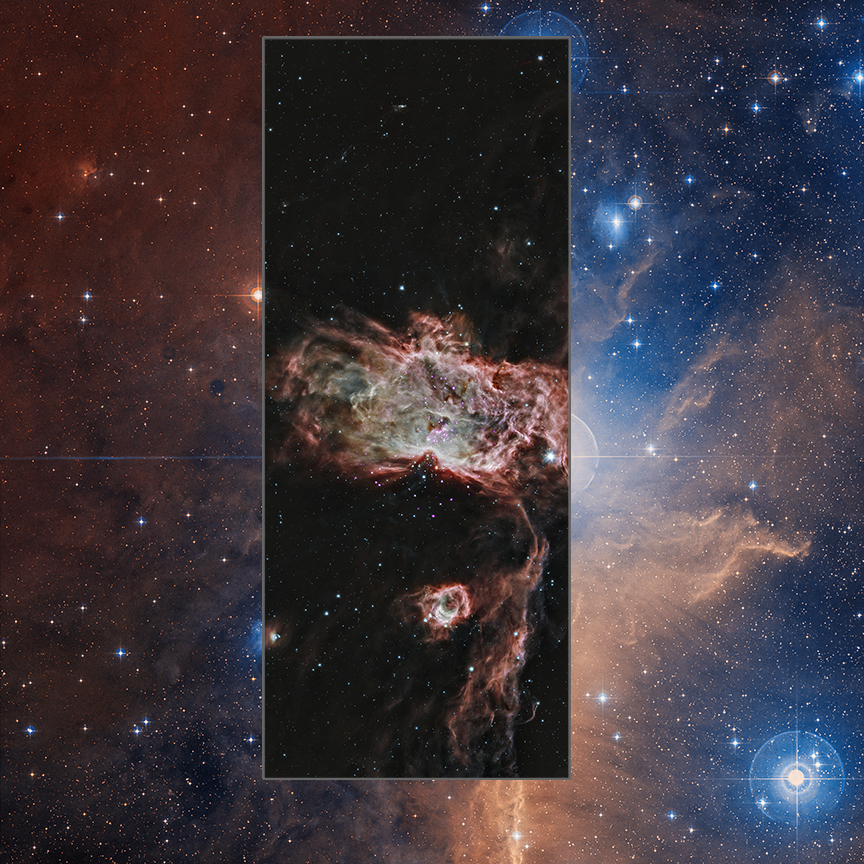
This image shows the Flame Nebula which is 1,400 light years away and consists of crowded star-forming regions toward Orion's Belt. The X-ray data from the Chandra Observatory and the infrared images from the Spitzer Space Telescope shows what is past the glowing gas and dust clouds. When scrolling over this image you can see the most recently formed stars. The youngest stars are in the center of the Flame Nebula. I think that it's interesting seeing this image of star formation in the Flame Nebula after we have learned about nebulae and star formation in astronomy class.


See Explanation.
Moving the cursor over the image will bring up an alternate version.
Clicking on the image will bring up the highest resolution version
available.

APOD: Meteors, Planes, and a Galaxy over Bryce Canyon

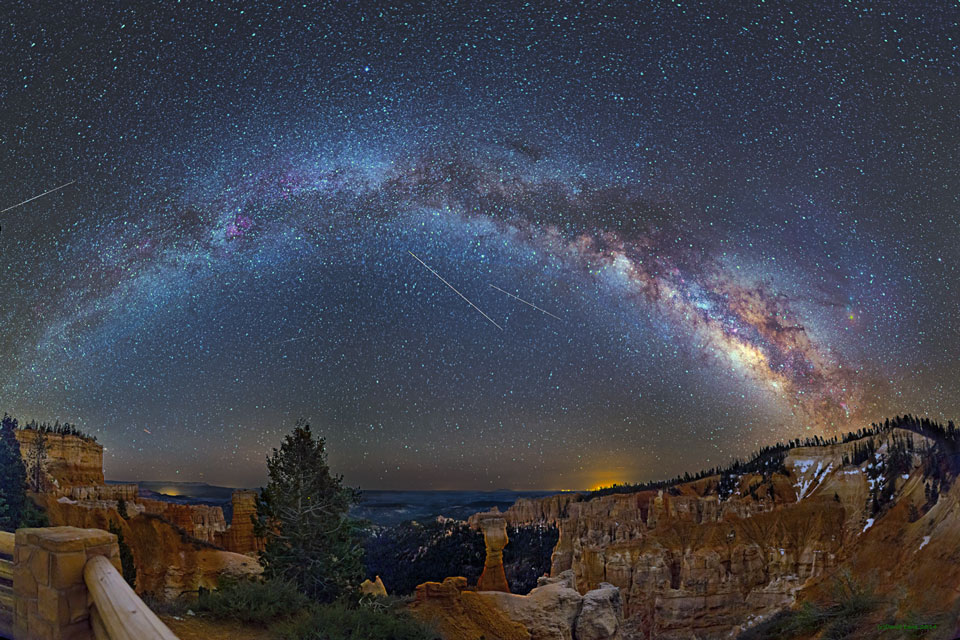
This picture was taken of Bryce Canyon in Utah. This location is famous for its rock structures. The landscape makes this the perfect place to photograph the arching central disk of our Milky Way Galaxy. This photo also features three planes, at least four Eta Aquariid meteors, and bright stars (including the summer triangle). This image is actually a panorama of 12 smaller images taken throughout early May. I think that this photograph is really beautiful. It's amazing being able to see so many things in our night sky.
See Explanation.  Clicking on the picture will download
 the highest resolution version available.

APOD: In the Center of Spiral Galaxy M61

M61 is found in the nearby Virgo Cluster of Galaxies. M61 has features found in many spiral galaxies like bright spiral arms, a central bar, dust lanes, and bright clusters of stars. M61 is similar to the Milky Way galaxy. M61 was discovered twice in the same day in the year 1779 although one astronomer mistook it for a comet. I found it interesting to learn that light from M61 takes 55 million years to reach Earth. This image was taken by the Hubble Space Telescope. It's amazing how detailed the image is.
See Explanation.  Clicking on the picture will download
 the highest resolution version available.

Thursday, May 22, 2014

APOD: Jupiter's Great Red Spot from Voyager 1

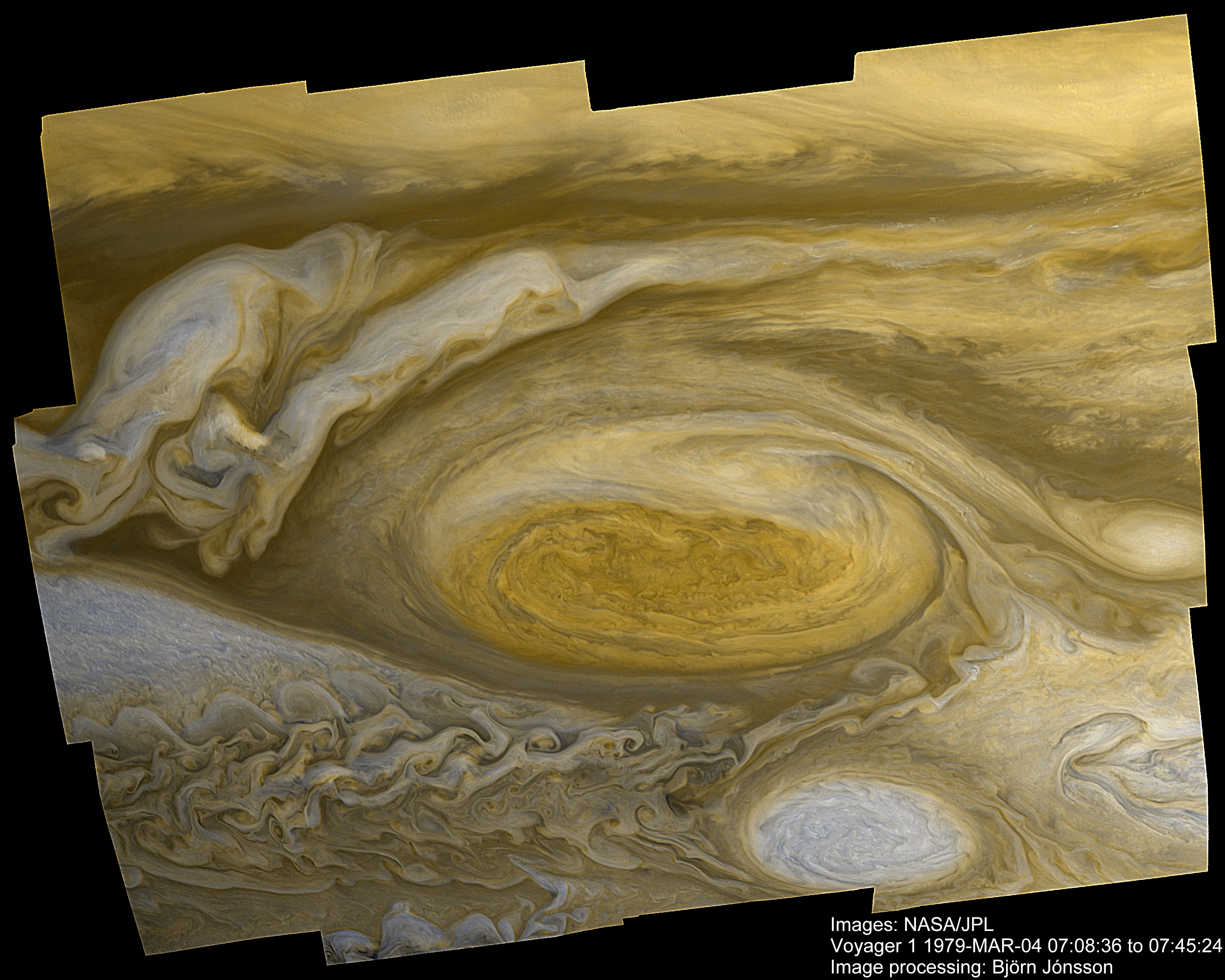
Jupiter's Great Red Spot was recorded as shrinking in the nineteen thirties. However, it's size appears to have grown in the past few years. This spot is larger than Earth and is hurricane-like. This feature is still not completely understood though we see that small eddies feed into the storm system. This image was a digital enhancement of Jupiter's Great Red Spot taken in 1979 by the Voyager 1. I think that it's amazing that this photograph is so detailed. It's also astounding how astronomers are able to get pictures of the surface of Jupiter that are this clear.
See Explanation.  Clicking on the picture will download
 the highest resolution version available.